Daniel R.
San Francisco, CA

I went to Dr. Liu for GainsWAVE and the p-shot. I found him to be quite informed, very friendly, and a pleasure to work with.
ReviewsDaniel R.
San Francisco, CA
I went to Dr. Liu for GainsWAVE and the p-shot. I found him to be quite informed, very friendly, and a pleasure to work with.
Reviews
Marcus B.
San Jose, CA
I found Dr. Liu, one of the only board certified plastic surgeons doing this procedure. We mixed both length and girth, and my confidence shot way up!
Reviews
Anthony C.
Palo Alto, CA
Dr. Liu and his team are amazing, very friendly and professional. I was nervous about having the procedure but Dr. Liu really knows what he is doing and eased my concerns
ReviewsConveniently located to serve the areas of San Francisco, CA
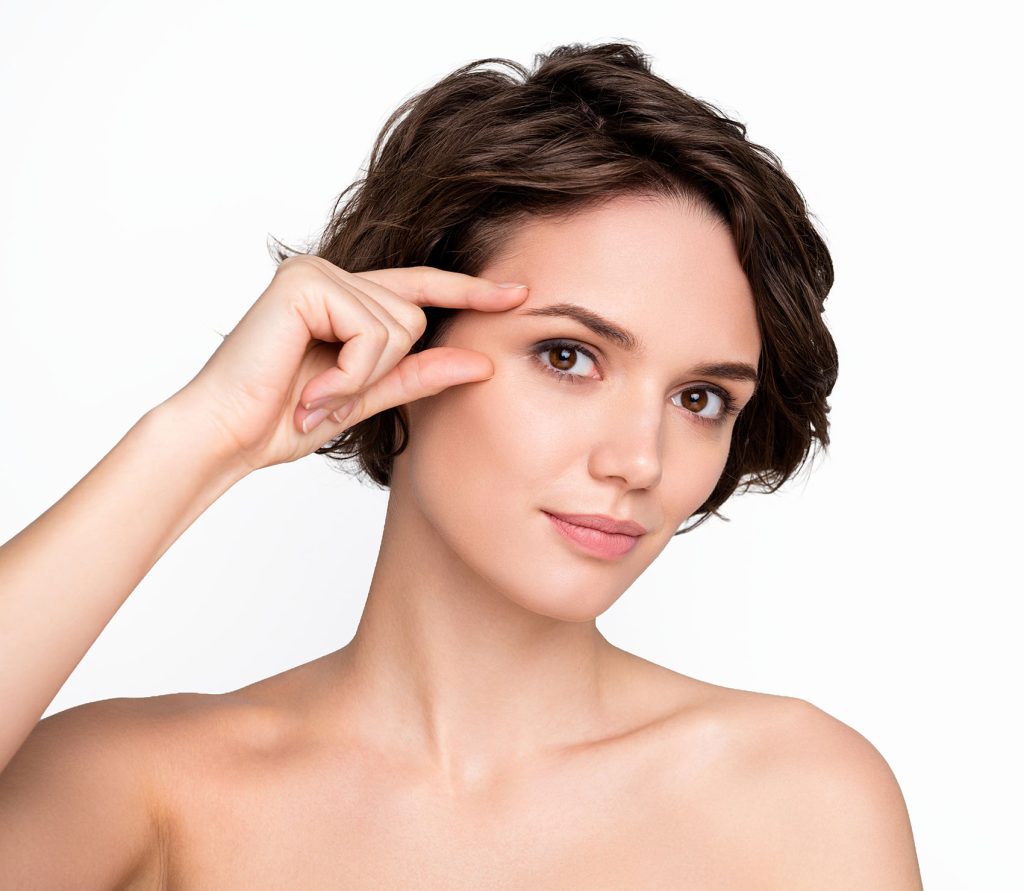
The eyelids and brows are one aesthetic unit and must be treated as a whole. The objectives of treatment are to reverse the signs of aging, to harmonize the relationship of the eyelids and brows and to improve the appearance as a whole and in relationship to the rest of the face.
Contents
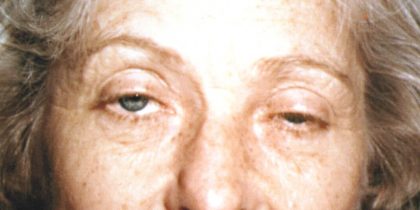
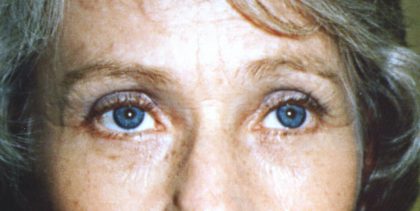
Many of the patients who presented to me for upper eyelids surgery have drooping of the eyebrows and unless that is corrected at the same time, it is difficult to obtain a pleasing appearance of the upper eyelids
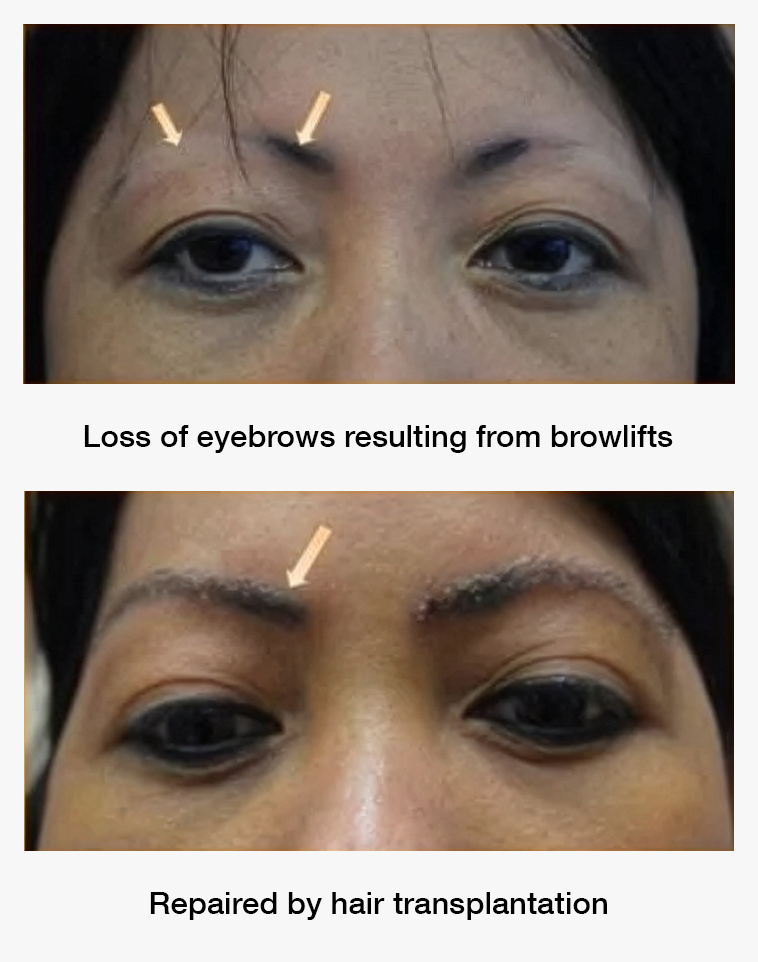
In the USA, browlifts are not done as often as they should be. I believe the main reason is that the traditional way of doing a brow lift is too major an operation and both the surgeon and the patients shy away from it. A traditional browlift is done with a long coronal incision extending from the upper part of one ear to the upper part of the other ear across the top of the head. This simply is too much surgery. In Asia, browlifts are often done with an incision just above the eyebrows. I think this is not a good procedure because the resulting scars are often noticeable, and in some cases, it causes loss of eyebrow hair, as shown in the following patient.
I have devised my own technique for lifting the brow, in which there is no extra skin incision and can be done as part of the upper eyelid surgery. I have not published this technique and I have only taught a few plastic surgeons how to do this.
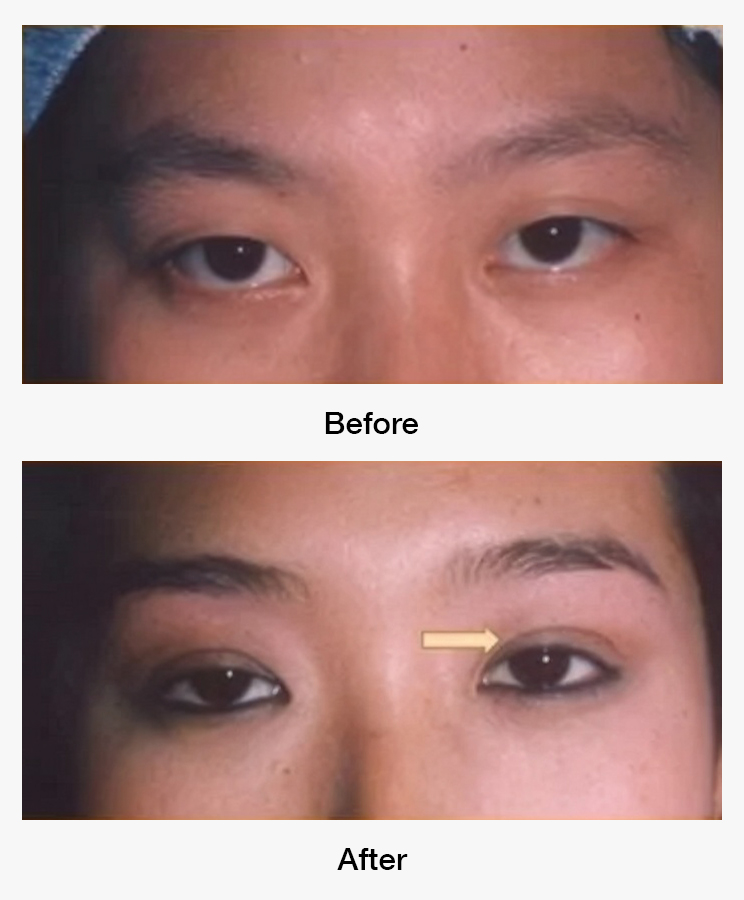
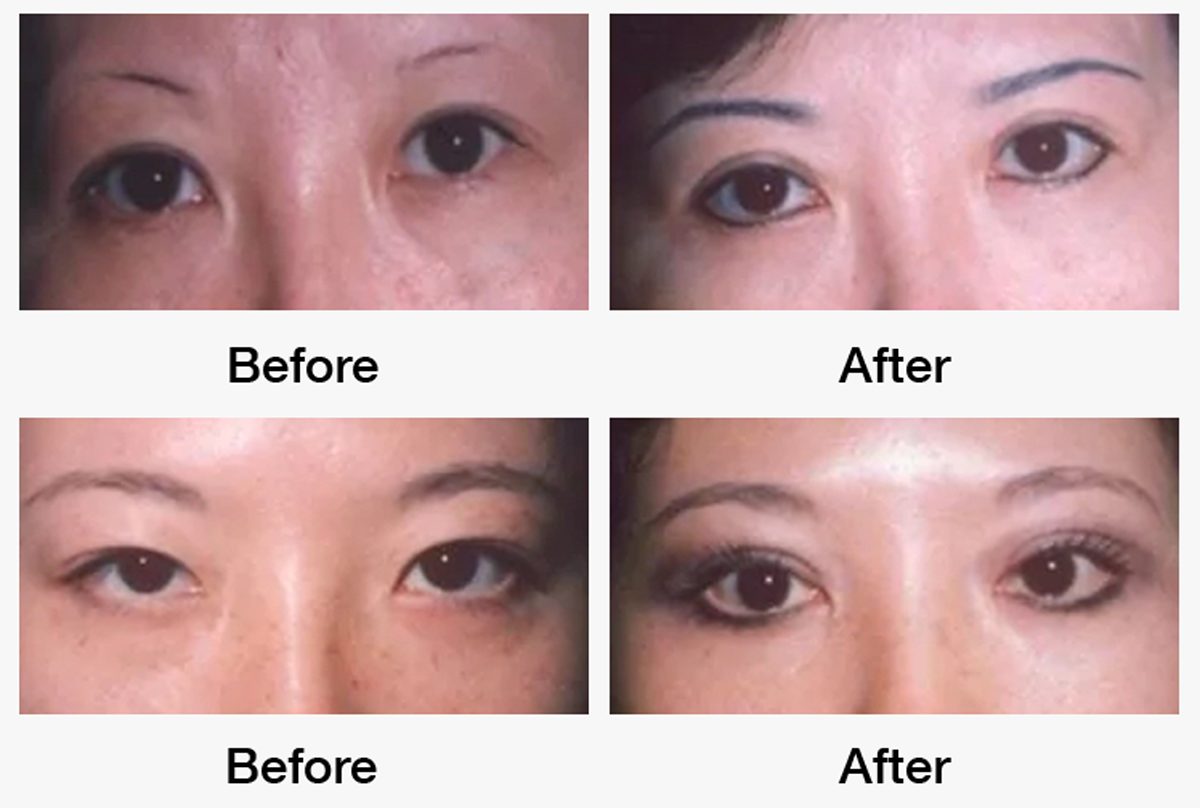
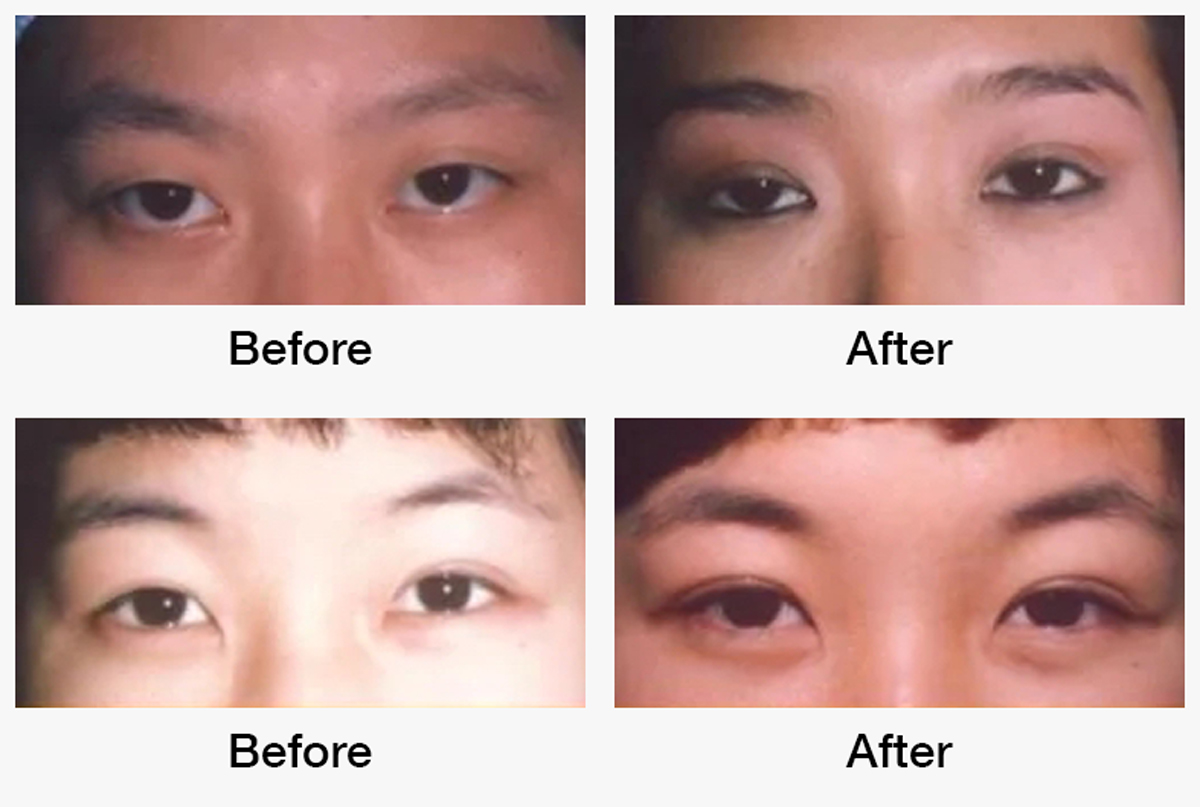
Many Asians do not have folds, or ‘double eyelids’ when the eyes are open. This is due to a structural difference between the Asian and the Caucasian upper eyelid. In Caucasians, the muscle elevating the upper eyelid is attached to the skin at the fold so that when it pulls to open the eyelid, the skin is folded, giving the ‘double eyelid’ appearance. In many Asians, however, the attachment is near the eyelashes, so that no fold is formed when the eye opens.
The usual treatment is to attach the muscle to the new ‘fold’ area of the skin. At the same time, excess skin and fat can be removed. This is usually required even in the young Asian patient, who tends to have ‘thick’ upper eyelids with excessive skin and fat deposits.
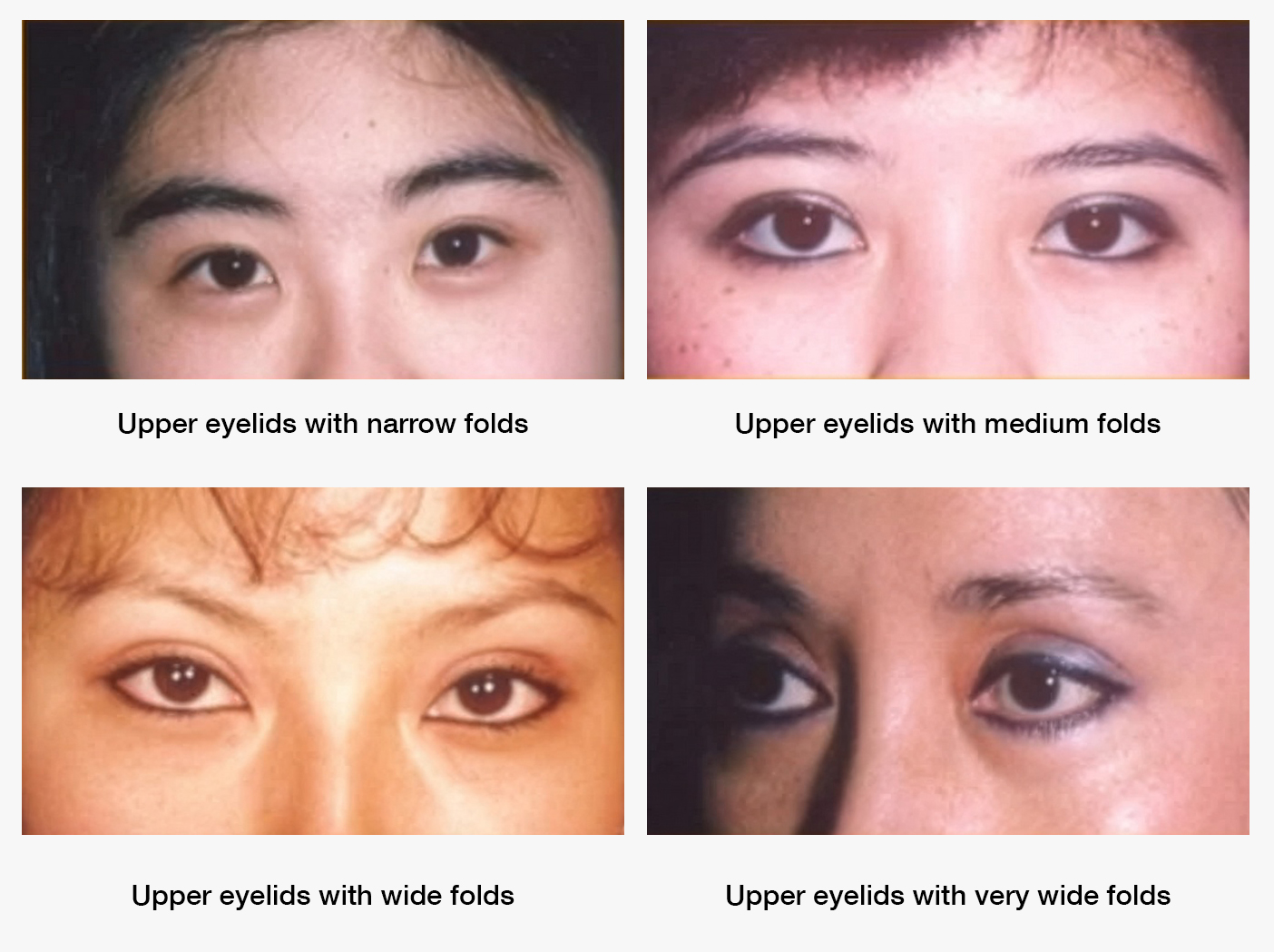
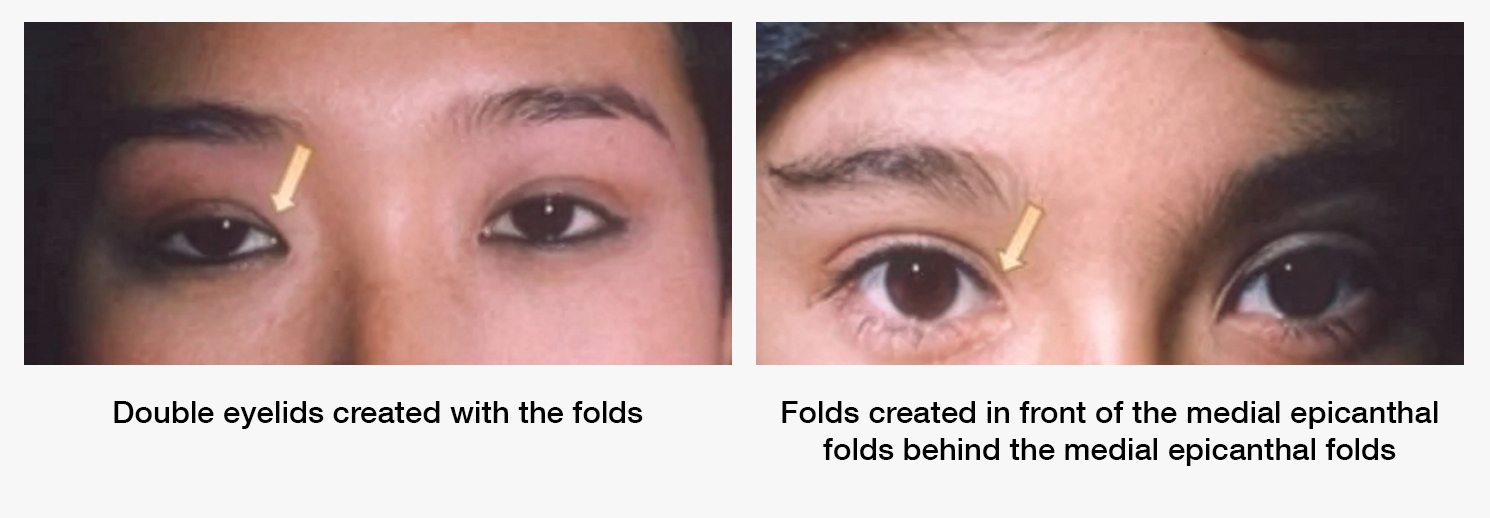
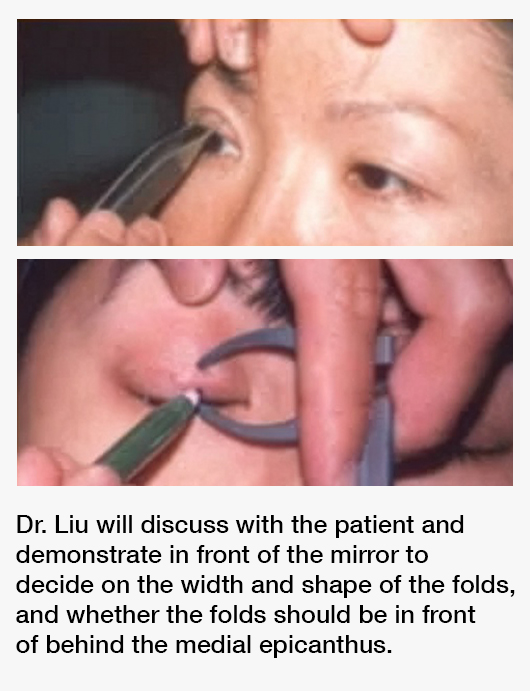
Depending on the size of the eyes, the width of the cheekbones and the wishes of the patients, different widths of the folds can be created. The fold can be in front of or behind the medial epicanthal fold.
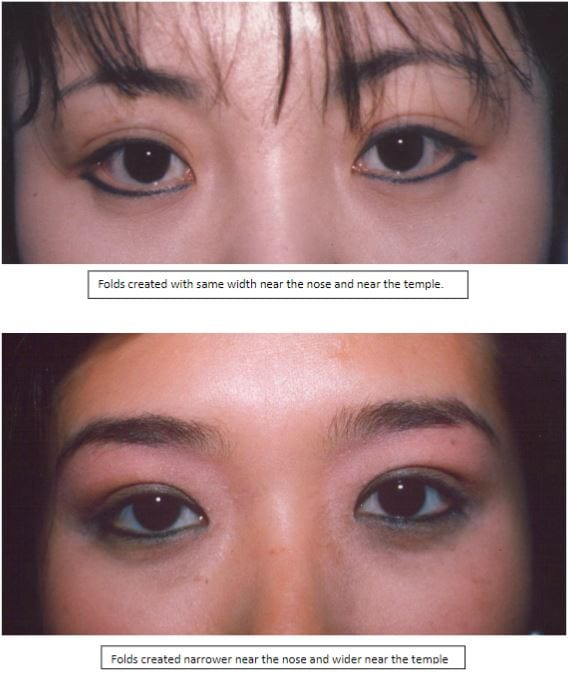
The shape of the folds is also important. In some patients, for example, those with round faces, the folds should be the same near the nose and near the temple. In other patients, for example, those with high cheek bones, the folds should be narrower near the nose and wider near the temple.