


Patient satisfaction is the cornerstone of any male genital intervention because it reflects not only the technical success of a procedure but also its impact on self‑esteem, sexual confidence, and relationship quality. Key variables that consistently predict higher satisfaction include the absence of major complications (infection, erosion, mechanical failure), realistic pre‑operative counseling, and the expertise of a board‑certified surgeon who uses minimally invasive, personalized techniques. Procedural factors such as device type (inflatable prostheses outperform malleable ones), measurable girth or length gains (e.g., ≥3 cm), and preservation of natural feel also play a role, while demographic factors (age, BMI, comorbidities) are less influential when complications are avoided. The evidence base draws from large multicenter implant (e.g., 902 men with penile implants showing 93 % high satisfaction when complications are absent), cross‑sectional studies of erectile‑darmac drugs, and cadaver and clinical data on suspensory ligament division and silicone implants. Together, these data underscore that meticulous patient selection, clear expectation setting, and surgical excellence are essential for achieving durable, high‑level satisfaction.
Contents
- 1 Clinical predictors of high satisfaction
- 2 Psychological, partner, and social influences
- 3 Setting realistic expectations through counseling
- 4 Procedure‑specific outcomes and safety profiles
- 5 Financial considerations and accessibility
- 6 Future directions and emerging research
- 7 Putting it all together for a satisfying outcome
Clinical predictors of high satisfaction

Impact of major versus minor complications
In a multicenter cohort of 902 men receiving penile implants, 93 % reported high satisfaction (Likert ≥ 4) at six months. The presence of any major complication—infection, erosion, or mechanical failure—dramatically reduced high‑satisfaction rates to 64.2 % compared with 96.7 % (no complications) and 97.5 % (only minor complications). Minor adverse events (hematoma, superficial wound breakdown) modestly lowered satisfaction to 87.7 % but were far less detrimental than major complications. Multivariable analysis demonstrated that the absence of a major complication was the sole significant predictor of high satisfaction (OR = 20, 95 % CI 9–50, p < .001).
Implant type differences in univariate analysis
When examined without adjustment for confounders, inflatable penile prostheses (IPP) yielded a higher rate of high satisfaction (86.8 %) than malleable prostheses (MPP) (76.0 %). However, after controlling for complications, implant type lost statistical significance, underscoring that the device’s mechanical reliability, not its class, drives patient contentment.
Statistical significance of complication‑free status
The odds of achieving high satisfaction were twenty‑fold greater when patients avoided major complications. This robust association persisted despite variations in age, BMI, diabetes, Peyronie’s disease, vascular risk factors, and surgeon volume, confirming that a complication‑free postoperative course is the paramount determinant of a favorable outcome.
What factors affect penis size?
Penis size is primarily dictated by genetics and hormonal milieu during puberty. Endocrine disorders, obesity, cardiovascular health, and chronic illness can modestly influence apparent size, but no credible evidence supports post‑pubertal enlargement via diet, supplements, or OTC products. Surgical or device‑based interventions remain the only proven means of altering dimensions.
Himplant® implant reviews
The Himplant® silicone implant is designed to increase girth and improve flaccid appearance. Results vary by individual anatomy and surgical factors. Risks include infection, seroma, scarring, and the possible need for revision or removal.
Penis ligament release
Suspensory ligament division releases the tether anchoring the penis, revealing an average gain of 0.5–2 cm in visible length. Performed under local anesthesia, recovery is brief, with swelling resolving within a week. Combining ligament release with adjunctive grafting or fat transfer can further improve girth and aesthetic outcomes.
Himplant® implant negative reviews
Criticisms focus on postoperative swelling, transient numbness, seroma formation (≈12 %), and occasional need for revision (≈7 %). Selecting an experienced, double‑board‑certified plastic surgeon mitigates these risks and enhances overall satisfaction.
Himplant® implant results
The Himplant® silicone implant is designed to provide natural‑looking girth and flaccid appearance enhancement when performed with proper counseling and postoperative care.

Self‑esteem and confidence are the most powerful drivers of post‑procedure satisfaction. Across multiple studies, men who report a boost in body image after enhancement procedures also show higher scores on validated quality‑of‑life scales, and the psychological benefit often outweighs modest physical gains. Realistic counseling that frames expected size increase as a confidence enhancer rather than a performance guarantee reduces disappointment and reinforces a positive self‑concept.
Partner satisfaction and relationship dynamics further shape outcomes. When a patient involves his partner in pre‑operative education, both parties report greater sexual confidence and reduced anxiety. Studies consistently show a strong correlation between partner approval and the patient’s overall satisfaction rating, emphasizing the need for couples‑based counseling and shared decision‑making.
Education, income, and cultural background influence expectations and perceived value of enhancement. Higher education and income levels are linked to more critical expectations; however, comprehensive counseling that aligns those expectations with realistic results mitigates dissatisfaction. Cultural attitudes toward penile size also affect how men interpret postoperative results, making culturally sensitive communication essential.
Himplant® implant reviews – Himplant® may increase girth by approximately 1–2 inches in some patients, and flaccid length may appear longer due to reduced retraction. Himplant® primarily affects girth and flaccid appearance; erect length changes are variable and not guaranteed. Risks include infection, seroma, scarring, and the possible need for revision or removal.
What factors affect penis size? – Genetics and hormonal milieu during puberty are the primary determinants of adult penile dimensions. Endocrine disorders, obesity, cardiovascular health, and chronic illness can modestly alter apparent size by affecting blood flow and tissue composition. There is no credible evidence that diet, supplements, or over‑the‑counter products produce lasting size changes after puberty; surgical or device‑based interventions remain the only effective means of altering dimensions.
Himplant® implant reviews – Himplant® may increase girth by approximately 1–2 inches in some patients, and flaccid length may appear longer due to reduced retraction. Patient satisfaction depends on individual anatomy, thorough counseling, and careful patient selection.
Setting realistic expectations through counseling

Effective pre‑operative counseling begins with a thorough psychological assessment that screens for body‑image disorders such as small‑penis anxiety and penile dysmorphic disorder. Identifying these concerns early allows clinicians to address unrealistic expectations, refer patients for counseling when needed, and tailor the enhancement plan to the individual’s mental health status.
Education on probable size gains is a cornerstone of realistic expectation setting. Data from multicenter studies demonstrate that most surgical and non‑surgical modalities produce modest improvements: Inflatable prostheses yield high satisfaction when complications are avoided, ligament division typically adds an average of 26 mm in flaccid length, and the Himplant® silicone implant is designed to enhance girth and flaccid appearance. Patients should be informed that erect length rarely changes, that gains vary by baseline anatomy, and that complications—especially major complications like infection—significantly reduce satisfaction (odds ratio ≈ 20 for high satisfaction when no major complication occurs).
The surgeon’s expertise and communication style profoundly influence outcomes. Procedures performed by double‑board‑certified plastic surgeons with extensive genital‑surgery experience are associated with lower complication rates and higher satisfaction scores. Clear, written after‑care instructions, transparent discussion of risks, and a personalized treatment plan that respects the patient’s anatomy and goals build confidence and reduce postoperative disappointment.
Himplant® implant reviews – The Himplant® silicone implant is designed to enhance girth and flaccid appearance, and many men note a fuller appearance. Erect length changes are variable and not guaranteed. Risks include infection, seroma, scarring, and the possible need for revision or removal.
Himplant® implant reviews – The Himplant® silicone implant is designed to enhance girth and flaccid appearance, and many men note a fuller appearance. Erect length changes are variable and not guaranteed. Risks include infection, seroma, scarring, and the possible need for revision or removal.
Procedure‑specific outcomes and safety profiles
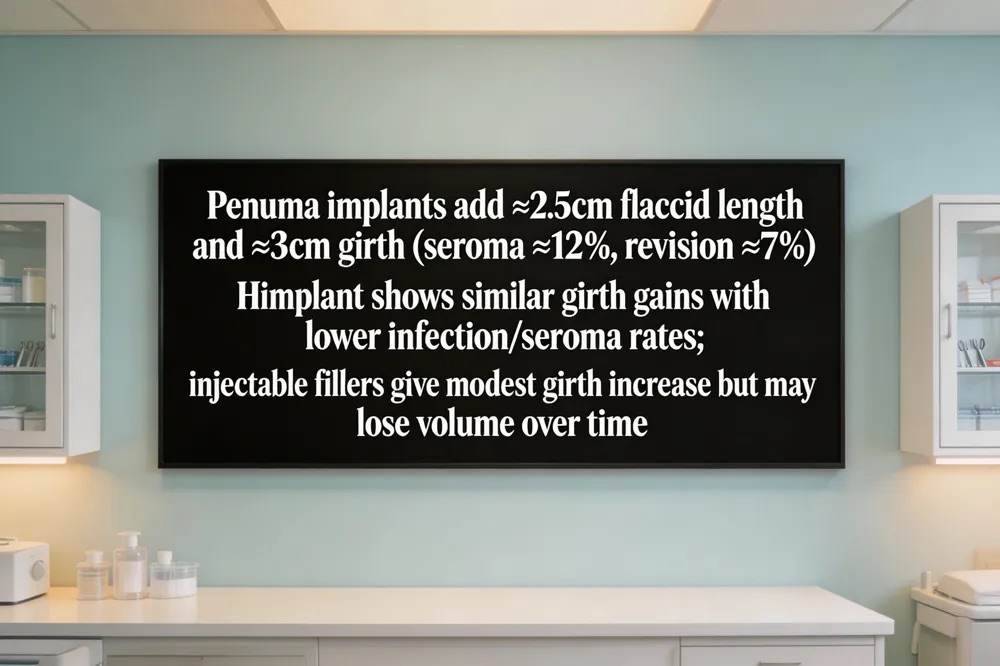
When men seek cosmetic enhancement, the choice of technique strongly influences both functional results and safety.
Himplant® versus injectable fillers: Himplant® is a silicone implant FDA‑cleared for aesthetic use that is designed to increase girth and improve flaccid appearance; erect length changes are variable and not guaranteed. Injectable hyaluronic‑acid fillers provide modest girth increases, but volume loss occurs over time and repeat treatments are needed.
Ligamentolysis combined with adjunctive grafts
Division of the suspensory ligament yields a uniform length gain of about 26 mm, especially in men with shorter baseline penises (r = ‑0.601). Adding V‑Y skin advancement flaps or grafts (autologous fat, acellular dermal matrix) preserves the new length and improves aesthetic outcomes, though risks of neurovascular injury and wound complications must be discussed pre‑operatively.
Complication rates and revision statistics
Across penile‑enhancement procedures, major complications (infection, erosion, mechanical failure) are the strongest predictor of dissatisfaction (odds ratio ≈ 20). Minor events (hematoma, superficial breakdown) modestly reduce satisfaction (≈88 % vs 96 % high satisfaction). Revision surgery is most common after implant placement (≈7‑13 % depending on approach) and rare after ligamentolysis when proper postoperative care is followed.
Patient‑reported outcomes
Positive reviews of the Himplant® implant highlight increased self‑esteem and a natural‑looking girth boost, while negative feedback often centers on postoperative swelling, seroma, or sensation changes. Selecting a double‑board‑certified plastic surgeon, adhering to postoperative protocols, and setting realistic expectations are repeatedly shown to maximize satisfaction and minimize complications.
Financial considerations and accessibility
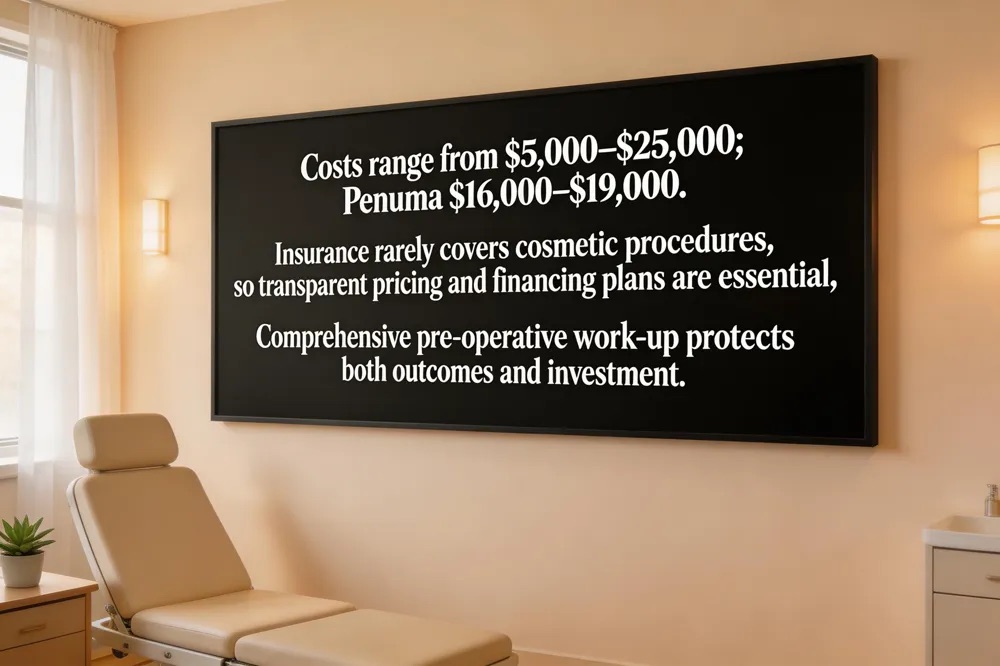
Understanding the financial landscape of male‑enhancement procedures helps patients plan realistic investments while ensuring access to safe, board‑certified care.
Cost ranges for various enhancement options – In the United States, enlargement surgery pricing varies by technique. Ligament‑release phalloplasties are typically $15,000‑$25,000, while girth‑focused techniques—autologous fat grafting or dermal filler injections—are less costly, averaging $3,500‑$9,000. Himplant® pricing is discussed during your consultation.
Insurance coverage and financing – Because these procedures are classified as cosmetic, most private insurers do not reimburse them. However, many clinics—including Dr. Victor Liu’s practice—offer transparent, itemized quotes during a free initial consultation and provide flexible financing plans (interest‑free installments, medical‑credit cards) to spread the cost.
Value of a comprehensive pre‑operative work‑up – A thorough pre‑operative assessment (medical history, psychological screening, baseline measurements) is essential for patient expectations and reduces postoperative complications, which in turn protects the financial investment. At Dr. Liu’s center, the fee includes this multidisciplinary evaluation, personalized surgical planning, and a structured postoperative follow‑up program, delivering value beyond the operative price alone.
By aligning cost, financing, and a rigorous work‑up, patients can make informed decisions and achieve safe, satisfying outcomes.
Future directions and emerging research
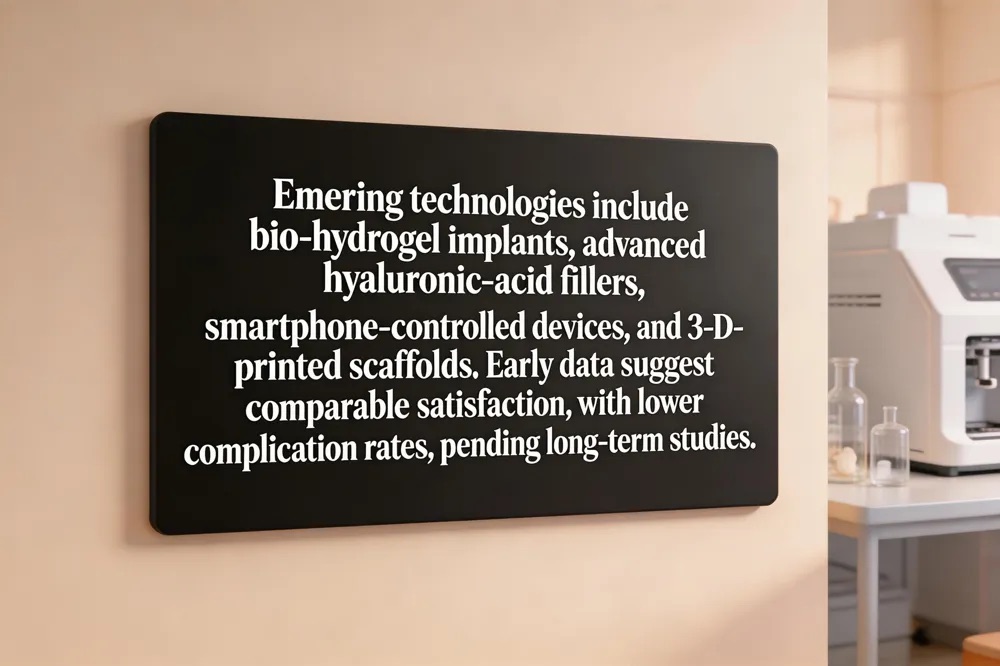
The next wave of male‑enhancement research is moving beyond traditional grafts and implants toward tissue‑engineering and advanced biomaterials.
Regenerative medicine and bio‑hydrogel implants – Investigators are testing polyvinyl‑alcohol (PVA) hydrogels engineered with a negative Poisson’s‑ratio that can be placed subcutaneously and expand with erections, providing a stable girth and modest length gain without permanent fibrosis. Early animal studies report durable volume retention and minimal inflammatory response, prompting first‑in‑human pilot trials slated for 2024.
Long‑term safety of novel fillers – Hyaluronic‑acidbased and hybrid polymer fillers continue to be refined to reduce nodule formation and improve durability. Recent retrospective reviews of 500 men show a <1 % serious‑adverse‑event rate when injections are performed by board‑certified specialists, and the ability to reverse the product with hyaluronidase offers an additional safety net. Ongoing prospective registries will clarify whether these agents can match the satisfaction levels seen with surgical options while maintaining a lower complication profile.
Potential impact of technology on satisfaction – Smartphone‑controlled penile implants, neuro‑modulator‑enhanced blood flow (e.g., Magnym™), and personalized 3‑D‑printed silicone scaffolds are being evaluated for their ability to personalize size outcomes and improve patient‑reported satisfaction. Early surveys indicate that patients who receive digital feedback on device function report higher confidence and lower regret.
Himplant® implant reviews – The Himplant® silicone implant is designed to enhance girth and flaccid appearance when performed by experienced, board‑certified surgeons. Risks include seroma, infection, occasional sensation changes, and the possible need for revision, and thorough counseling and care in a reputable clinic are important.
Putting it all together for a satisfying outcome
The most robust predictors of patient satisfaction after male‑enhancement procedures are the absence of major complications, realistic pre‑operative expectations, and the expertise of the operating surgeon. Multicenter data show that men who avoid infection, erosion, or mechanical failure are >20 times more likely to report high satisfaction, while counseling that aligns size and functional goals dramatically improves perceived outcomes. Dr. Victor Liu, a double‑board‑certified plastic surgeon with specialized training in genital reconstruction, brings specialized training that is an important consideration for patients. His personalized, evidence‑based approach integrates thorough psychological screening, meticulous surgical technique, and structured postoperative follow‑up. If you are considering penile implants, ligament release, or minimally invasive girth augmentation, schedule a confidential, one‑on‑one consultation with Dr. Liu to discuss your goals, review realistic expectations, and create a customized treatment plan that maximizes confidence and long‑term satisfaction.
About Dr. Victor Liu
Plastic Surgeon · Victor Liu
- Board certification
- Memberships
- American Society of Plastic Surgeons
- Fellow American College of Surgeons
- NPI
- 1861765901